Published: March 16, 2026 | Medically reviewed: WebEyeClinic Ophthalmology Team | Last updated: March 16, 2026
What Does My OCT Eye Scan Mean?
Many patients receive an OCT scan during an eye examination but leave the clinic without fully understanding the results. The report may show numbers, colored maps, and cross-section images of the retina that look technical and difficult to interpret. Because of this, people often ask what their OCT eye scan actually means and whether the findings are normal.
OCT stands for Optical Coherence Tomography. It is a detailed scan that shows the layers of the retina, optic nerve, and macula. Doctors use it to detect glaucoma, macular degeneration, retinal swelling, nerve damage, and many other eye conditions. Understanding the result depends on more than one number, and the scan should always be interpreted together with symptoms and examination findings.
Quick medical summary: An OCT scan shows detailed images of the retina and optic nerve. Doctors look at thickness measurements, layer structure, and color maps to detect problems such as glaucoma, macular disease, retinal swelling, or nerve damage. A single number does not give the full diagnosis, and results should always be reviewed in context.
If your OCT report looks confusing, a specialist review can help explain whether the result sounds normal, borderline, or needs further tests.
What is an OCT eye scan?
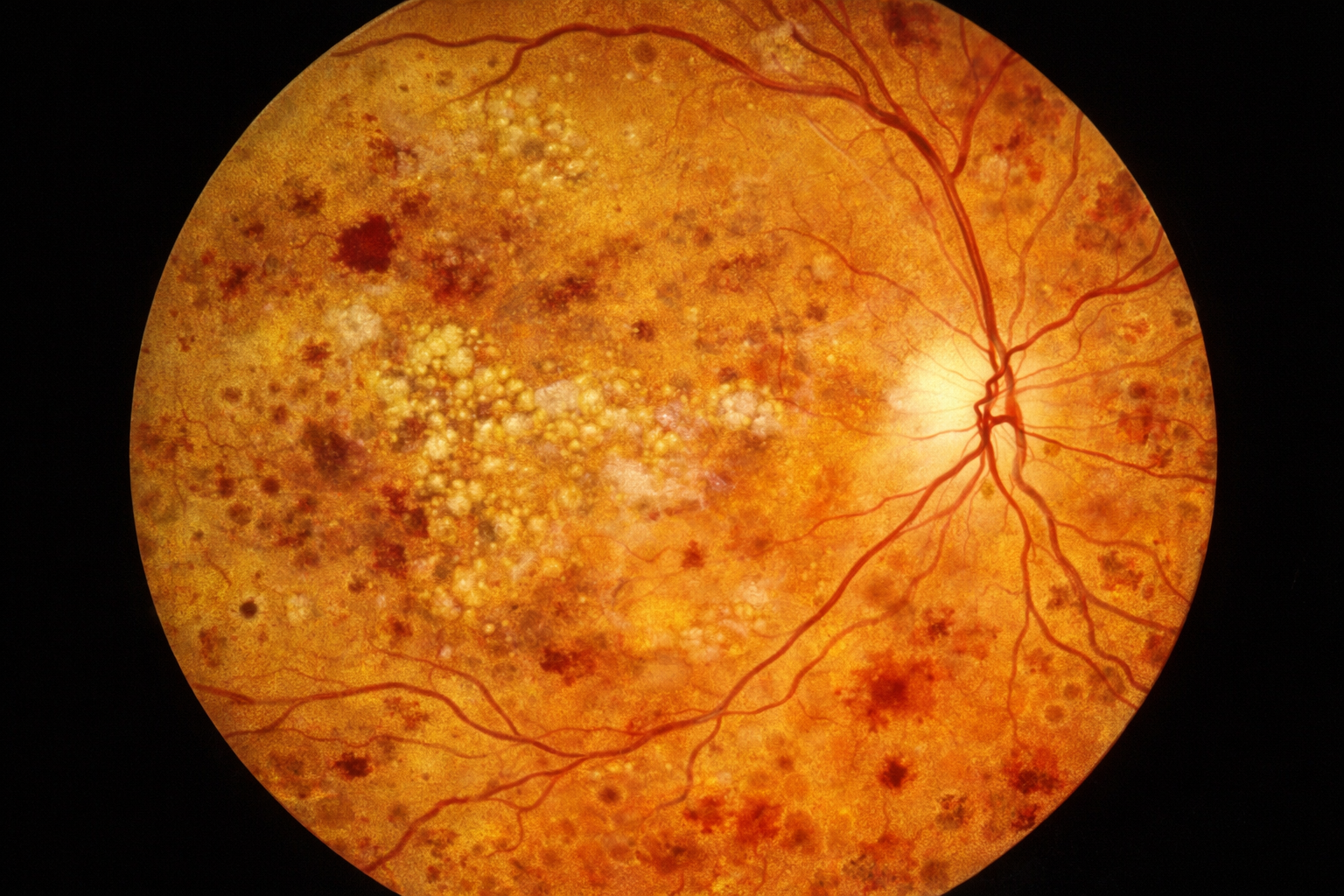
OCT is a non-invasive imaging test that uses light waves to create detailed cross-section pictures of the retina. The retina is the thin layer at the back of the eye responsible for vision. The scan allows the doctor to see the different layers of the retina in very high detail.
OCT is commonly used to check the macula, optic nerve, and nerve fiber layer. It is one of the most important tests in modern ophthalmology.
Why did my doctor order an OCT scan?
An OCT scan may be done for many reasons, including checking for glaucoma, macular degeneration, diabetic eye disease, retinal swelling, or unexplained vision changes.
- Glaucoma or high eye pressure
- Blurred or distorted vision
- Macular degeneration
- Diabetic retinopathy
- Floaters or flashes
- Optic nerve problems
- Follow-up after eye surgery
The scan helps detect problems earlier than a normal eye exam alone.
What do the colors on my OCT report mean?
Many OCT reports show green, yellow, and red areas. These colors compare your results to a normal database.
- Green usually means within normal range
- Yellow means borderline
- Red means outside normal range
However, red does not always mean disease, and green does not always mean everything is perfect. The doctor must interpret the scan together with the clinical exam.
What numbers are important on OCT?
Different numbers are measured depending on the type of OCT scan.
Retinal thickness
Used to check for swelling, macular degeneration, or fluid in the retina.
RNFL thickness
This measures the nerve fiber layer around the optic nerve and is important for glaucoma evaluation.
Ganglion cell layer
This helps detect early nerve damage that may not yet affect vision.
Optic nerve measurements
These are used to evaluate glaucoma risk and optic nerve health.
Does an abnormal OCT mean I have a serious problem?
Not always. Some results look abnormal because of normal variation, high myopia, previous surgery, or scan quality. A diagnosis should never be made from OCT alone.
Doctors usually compare the scan with symptoms, eye pressure, visual field test, and clinical examination before deciding if treatment is needed.
When should you ask for clarification?
You may want a clearer explanation if:
- you were told the scan is abnormal but not why
- you were started on treatment without clear explanation
- the report shows red or yellow areas
- you still have symptoms but results were called normal
- you want a second opinion
When online review of OCT may help
Because OCT reports contain images and measurements, they can often be reviewed online by another ophthalmologist. This can help explain the findings and decide whether the result sounds normal, borderline, or concerning.
Need help understanding your OCT scan?
WebEyeClinic offers a paid online review service for OCT scans, eye reports, visual fields, and eye pressure results.
This may help if you want a second opinion or need a clear explanation of your diagnosis.
Related articles on WebEyeClinic
- Can an Online Eye Doctor Review My Reports?
- What Does High Eye Pressure Mean?
- What Eye Symptoms Should Never Be Ignored?
- Are Eye Floaters Normal or Dangerous?
Bottom line
An OCT scan gives very detailed information about the retina and optic nerve, but the results are not always easy to understand without explanation. Colors, numbers, and images must be interpreted together, and abnormal results do not always mean serious disease. If your report is confusing, getting a clear explanation may help you make better decisions about your eye care.
Medical disclaimer: This article is for education only and does not replace medical examination.
Medically reviewed by: WebEyeClinic Ophthalmology Team | Last updated: March 16, 2026