Published: 21 March 2026 | Medically reviewed | Last updated: 21 March 2026
Sudden Floaters in One Eye
Suddenly noticing floaters in one eye can be alarming. Floaters are small specks, cobwebs, threads, or shadowy shapes that drift across your vision. Many floaters are harmless and happen as the jelly inside the eye changes with age. But when floaters appear suddenly, especially in one eye, they can sometimes be a warning sign of a more serious problem such as a posterior vitreous detachment, a retinal tear, or a retinal detachment.
Quick summary: Sudden floaters in one eye are often caused by changes in the vitreous gel, especially a posterior vitreous detachment, but they should never be ignored. If the floaters are new, suddenly increase, or happen with flashes of light, blurred vision, or a dark curtain over your sight, you need an urgent eye examination to rule out a retinal tear or retinal detachment.
What Causes Sudden Floaters in One Eye?
The most common cause of sudden floaters is a change in the vitreous, the clear gel that fills the inside of the eye. As people get older, this gel becomes more liquid and can pull away from the retina. This is called a posterior vitreous detachment (PVD). A PVD is common, especially with aging, and many cases do not cause lasting harm. However, when the vitreous pulls away, it can sometimes tug on the retina strongly enough to create a retinal tear. If fluid passes through that tear, the retina can detach, which is an eye emergency.
Other possible causes of sudden floaters in one eye include:
- Retinal tear
- Retinal detachment
- Bleeding inside the eye, such as a vitreous hemorrhage
- Inflammation inside the eye
- Eye injury or trauma
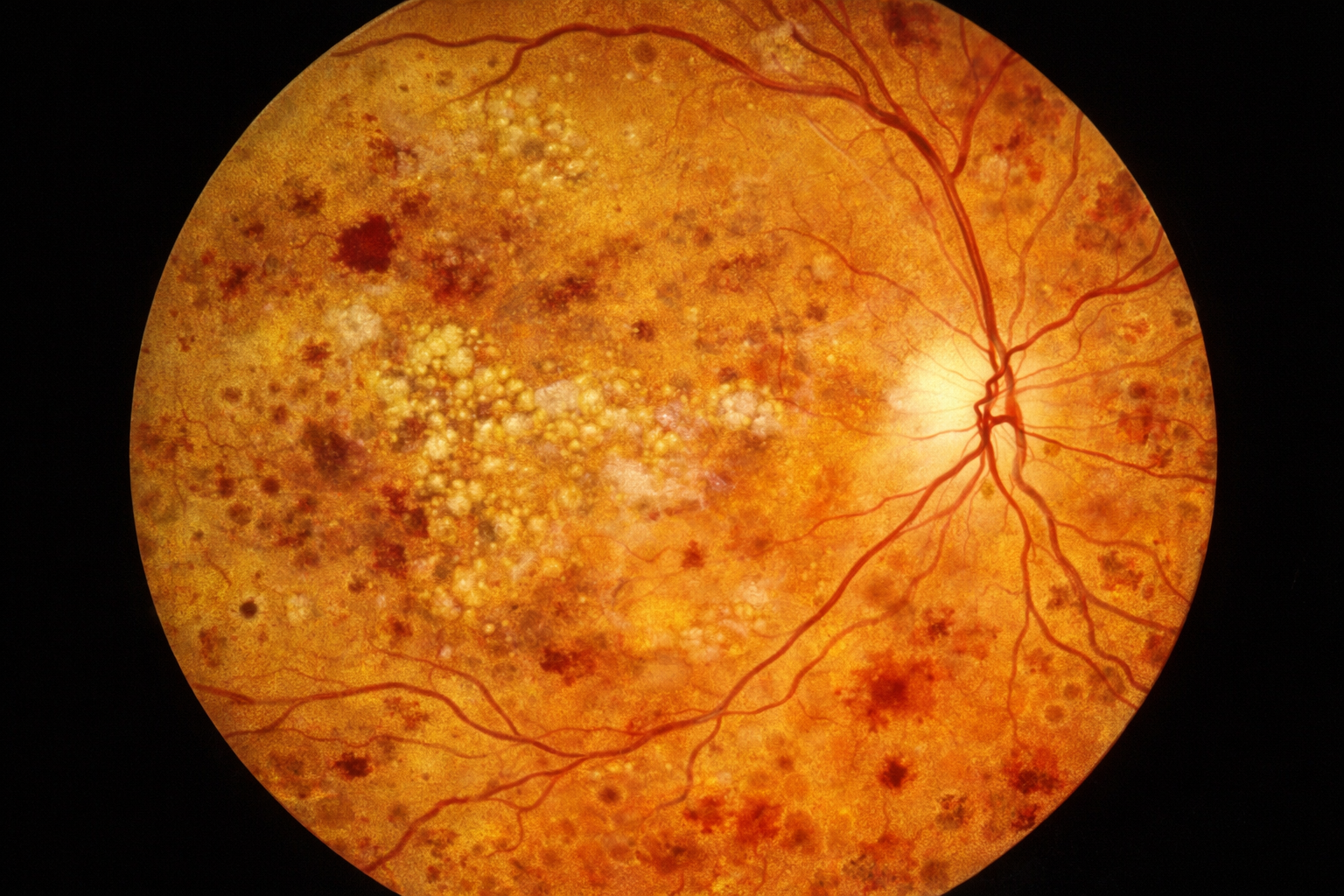
- Complications related to diabetes or other retinal disease
What Do Floaters Look Like?
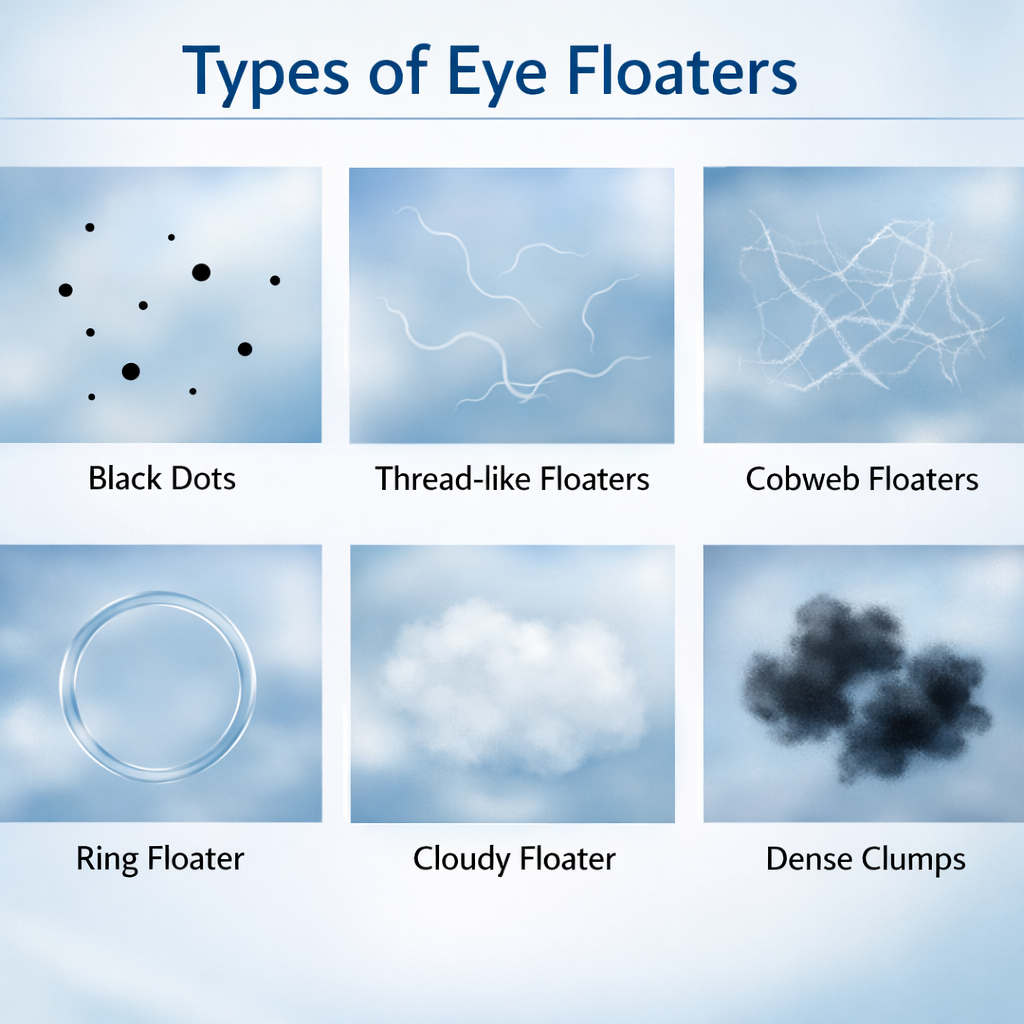
People describe floaters in different ways. They may look like:
- Black or gray dots
- Thread-like strands
- Cobweb shapes
- Curved squiggles
- Transparent shadows that drift when the eye moves
They are often most noticeable when looking at a bright plain background, such as a white wall, computer screen, or blue sky.
Why One Eye Matters
When floaters happen in only one eye, it suggests that the change is likely coming from that specific eye rather than from a general visual phenomenon. A sudden one-sided onset is important because retinal tears, retinal detachment, vitreous hemorrhage, and posterior vitreous detachment often affect one eye at a time. That is one reason new floaters in one eye should be taken seriously.
When Are Sudden Floaters an Emergency?
Sudden floaters may need urgent assessment if they happen for the first time or if they suddenly become much more noticeable. The risk becomes more concerning when they are accompanied by other symptoms that suggest the retina may be under traction or damaged.
Seek urgent eye care immediately if you suddenly get floaters in one eye along with:
- Flashes of light
- A sudden increase in the number of floaters
- Blurred or reduced vision
- A dark curtain, veil, or shadow moving across your vision
- Eye pain after injury or surgery
Posterior Vitreous Detachment vs Retinal Tear
A posterior vitreous detachment is a common cause of sudden floaters, especially in older adults and people who are short-sighted. In many cases, it settles without serious damage. But symptoms alone cannot safely rule out a retinal tear. A retinal tear may cause the same early warning signs, especially new floaters and flashing lights. That is why a dilated retinal examination is often needed when symptoms start suddenly.
A retinal detachment is more serious. It may cause floaters and flashes at first, then progress to a shadow, curtain, or loss of side vision. If not treated quickly, it can lead to permanent vision loss.
Who Is More at Risk?
Some people have a higher risk of retinal tears or retinal detachment when new floaters appear. Risk factors include:
- Older age
- Short-sightedness (myopia)
- Previous retinal tear or detachment
- Eye trauma
- Recent eye surgery
- Diabetes affecting the retina
- Family history of retinal detachment
How Sudden Floaters Are Diagnosed
An eye doctor usually checks sudden floaters with a full eye examination, often including pupil dilation so the retina can be examined properly. The main aim is to find out whether the floaters are from a harmless vitreous change or from a sight-threatening problem such as a retinal tear, retinal detachment, or bleeding inside the eye.
Depending on the situation, the doctor may also check:
- Visual acuity
- Eye pressure
- The vitreous gel and retina with slit-lamp and retinal examination
- Ocular ultrasound if the retina cannot be seen clearly
Treatment for Sudden Floaters in One Eye
Treatment depends on the cause.
- Posterior vitreous detachment: may only need monitoring if there is no retinal tear
- Retinal tear: may need urgent laser treatment or cryotherapy to seal the tear
- Retinal detachment: usually requires urgent specialist treatment or surgery
- Vitreous hemorrhage or inflammation: treatment depends on the underlying cause
Many ordinary floaters become less noticeable with time as the brain adapts and the shadows settle. However, this should only be assumed after the retina has been checked.
Should You Wait and See?
Do not ignore sudden new floaters in one eye, especially if they appeared over hours or days rather than gradually over months. A wait-and-see approach may delay diagnosis of a retinal tear or retinal detachment. Even if the symptoms turn out to be from a posterior vitreous detachment, you usually cannot tell safely without a proper eye examination.
Final Answer
Sudden floaters in one eye are often caused by changes in the vitreous gel, especially a posterior vitreous detachment, but they can also be an early warning sign of a retinal tear or retinal detachment. That is why new or suddenly increased floaters in one eye should be assessed urgently, particularly if you also notice flashes, blurred vision, or a curtain-like shadow.
In other words, sudden floaters in one eye may be harmless, but they should be treated as urgent until a serious retinal problem has been ruled out.
Concerned about new floaters?
Ask an eye doctor at
WebEyeClinic
for guidance on flashes, floaters, warning signs, and when urgent care is needed.
This article is for educational purposes only and does not replace medical advice, diagnosis, or treatment. Sudden floaters can sometimes be a sign of a retinal tear or retinal detachment, which may require urgent assessment. Medically reviewed | Last updated: 21 March 2026.