Published: March 6, 2026
This guide explains eye styes, including what causes them, how long they last, treatment options, and when to see an eye doctor. Medically reviewed by an ophthalmologist.
An eye stye (also called a hordeolum) is a common eyelid infection that causes a small, painful lump near the edge of the eyelid. Many people search for answers like what causes styes in the eye, how to remove a stye from the eye, or how to treat a stye quickly. Although styes are usually harmless, they can be uncomfortable and sometimes recur if the underlying cause is not addressed.
Understanding why styes occur and how to treat them safely can help reduce discomfort and prevent future infections.
What Is an Eye Stye?
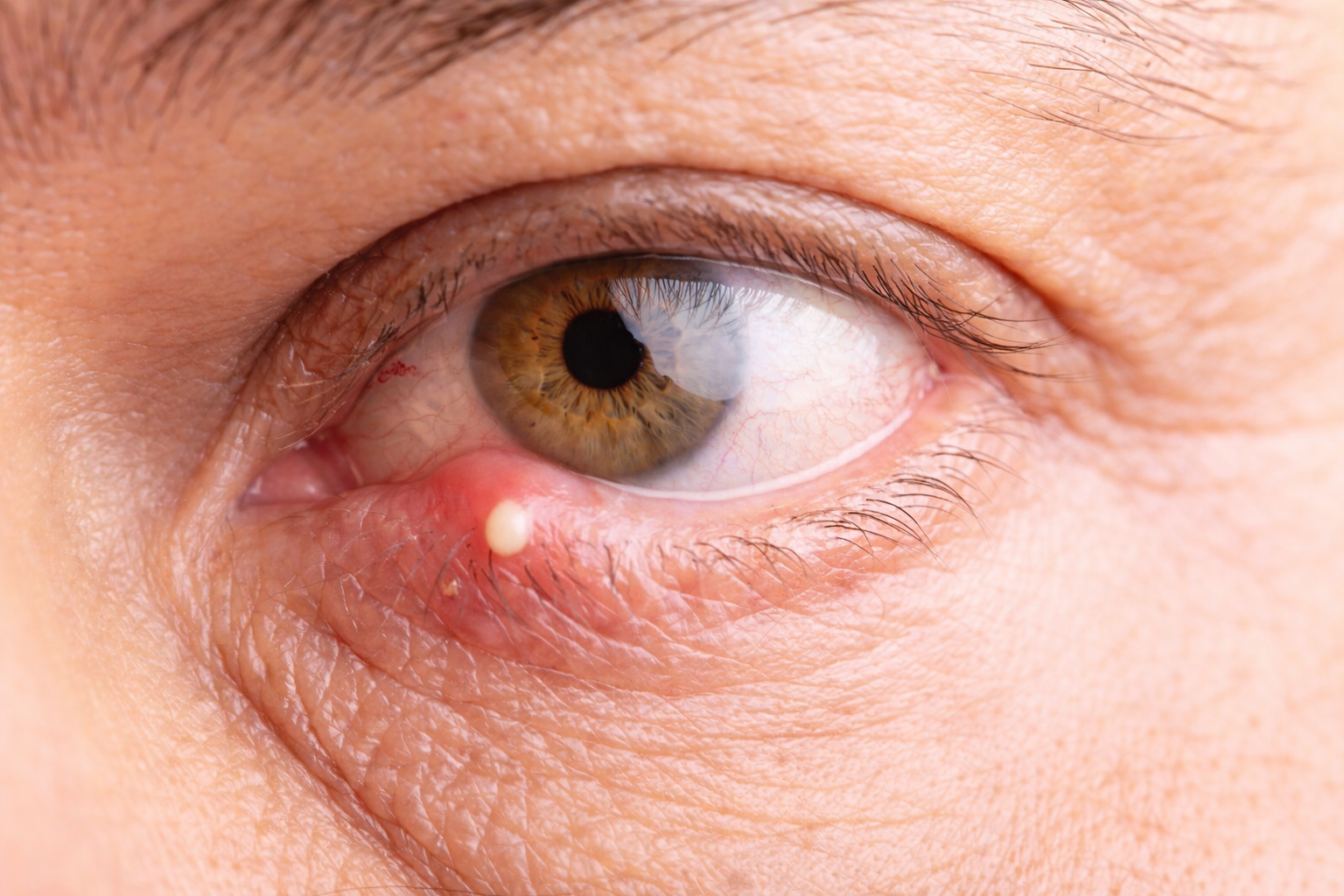
An eye stye is a localized infection of the oil glands in the eyelid, usually caused by bacteria such as Staphylococcus aureus. The infection leads to inflammation and swelling that appears as a red bump on the eyelid.
Styes may develop:
- At the base of the eyelashes (external stye)
- Inside the eyelid where oil glands become blocked (internal stye)
They often resemble a small pimple and may cause eyelid tenderness, redness, swelling, and mild tearing.
What Causes Styes in the Eye?
People often ask what causes styes in the eye. The most common cause is bacterial infection of the eyelid oil glands. Several factors increase the risk of developing a stye.
- Blocked oil glands in the eyelid
- Poor eyelid hygiene
- Touching the eyes with unclean hands
- Using expired or contaminated makeup
- Blepharitis (chronic eyelid inflammation)
- Contact lens use without proper hygiene
- Skin conditions such as rosacea
When these oil glands become blocked, bacteria can multiply and trigger infection, leading to a stye.
How Long Do Styes Last?
Many patients wonder how long do styes last. In most cases, a stye lasts between 7 and 10 days. With proper care, the swelling usually begins to improve within a few days and the infection resolves on its own.
However, some styes may persist longer or develop into a chalazion, which is a painless lump caused by a blocked gland after the infection has resolved.
How to Treat a Stye in Your Eye
People frequently search how do you treat a stye in your eye. The first-line treatment is usually simple home care.
- Warm compress: Apply a warm compress to the eyelid for 10–15 minutes several times per day.
- Eyelid hygiene: Gently clean the eyelid with diluted baby shampoo or eyelid cleanser.
- Avoid squeezing: Do not attempt to pop or squeeze a stye.
- Stop using eye makeup: Avoid cosmetics until the infection resolves.
Warm compresses help soften blocked oils and promote natural drainage of the infected gland.
How to Get a Stye Out of Your Eye
Many people ask how to get a stye out of your eye. It is important to understand that styes usually resolve naturally and should not be forced open.
Instead of squeezing the stye, the safest approach is:
- Use warm compresses daily
- Keep eyelids clean
- Avoid touching the infected area
- Allow the stye to drain naturally
If the stye does not improve within one to two weeks, an eye doctor may drain it in a sterile clinical procedure.
Eye Stye Drops and Antibiotic Treatment
Doctors sometimes prescribe eye stye drops or antibiotic ointments when infection spreads or when styes occur repeatedly.
One antibiotic occasionally used for bacterial eye infections is moxifloxacin eye drops. These drops belong to a class of antibiotics called fluoroquinolones and are used to treat bacterial eye infections such as conjunctivitis.
However, antibiotic drops are not always necessary for simple styes and should only be used under medical supervision.
How to Remove a Stye from the Eye
If a stye becomes large or persistent, patients often ask how to remove a stye from the eye. In these situations, an ophthalmologist may perform a minor procedure called incision and drainage.
This procedure:
- Is performed under local anesthesia
- Takes only a few minutes
- Allows the infected gland to drain safely
Surgical drainage is usually reserved for styes that do not respond to conservative treatment.
Recurring Stye in the Eye
A recurring stye in the eye can be frustrating. Frequent styes may indicate an underlying eyelid condition such as:
- Chronic blepharitis
- Meibomian gland dysfunction
- Rosacea
- Poor eyelid hygiene
Regular eyelid cleaning, warm compresses, and proper makeup hygiene can help reduce recurrence.
When to See an Eye Doctor
You should see an eye doctor if:
- The stye lasts longer than two weeks
- The swelling spreads across the eyelid
- Vision becomes blurry
- The eyelid becomes extremely painful
- Styes keep recurring
In these cases, medical evaluation may be necessary to rule out other eyelid conditions.
Conclusion
Eye styes are common infections of the eyelid glands that usually resolve within one to two weeks. Most cases can be treated with warm compresses, eyelid hygiene, and avoiding irritation to the affected eye.
If styes become severe, recurrent, or fail to improve, an eye doctor may recommend antibiotic treatment, eye drops, or minor drainage procedures.
Understanding what causes styes and how to treat them properly can help reduce discomfort and prevent future infections.
Medically reviewed by: WebEyeClinic Ophthalmology Team.
Last updated: March 6, 2026.