Published: 21 March 2026 | Medically reviewed | Last updated: 21 March 2026
What Are the Early Warning Signs of Glaucoma?
Glaucoma is a group of eye diseases that damage the optic nerve and can cause permanent vision loss if not treated. One of the most important things to know about glaucoma is that the most common form, primary open-angle glaucoma, often develops slowly and quietly. That means many people expect obvious early symptoms, but in reality, glaucoma frequently causes damage before a person notices anything is wrong.
Because of that, the “early warning signs” of glaucoma are a little different from what people expect. For the most common type, there may be no early symptoms at all. For other forms, especially acute angle-closure glaucoma, the warning signs can be sudden and dramatic.
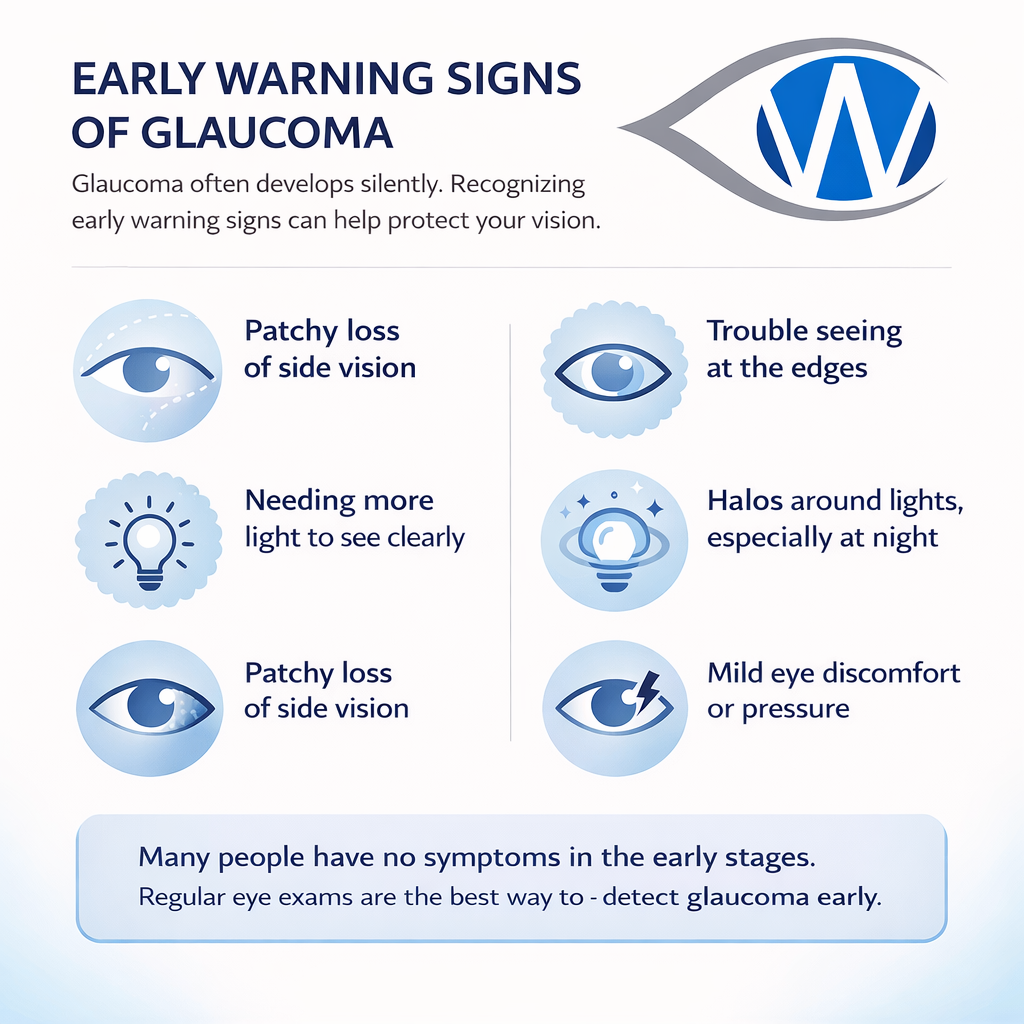
Quick summary: The most common type of glaucoma often has no early warning signs. As it worsens, people may notice patchy blind spots, loss of side vision, or tunnel vision. A different type, acute angle-closure glaucoma, can cause sudden severe eye pain, a red eye, blurred vision, halos around lights, headache, nausea, and vomiting and is an eye emergency.
1. The Most Common Early Sign of Glaucoma Is Often No Symptoms
This is the part many people do not realize. In open-angle glaucoma, which is the most common type, vision may seem normal in the early stages. There is usually no pain, no obvious redness, and no dramatic warning sign. Damage can build up slowly while a person still feels that their sight is fine.
That is why glaucoma is sometimes called a “silent” eye disease. By the time symptoms become noticeable, some vision loss may already have occurred. Unlike a temporary eye irritation, glaucoma-related vision loss is usually irreversible, which is why early detection matters so much.
2. Gradual Loss of Side Vision Can Be an Early Functional Clue
When glaucoma does start to affect vision, one of the earliest changes is often loss of peripheral vision, also called side vision. At first, this may be subtle. You may not notice it while reading or looking straight ahead, but you may miss objects off to the side or find it harder to notice movement in your peripheral field.
Some people only realize something is wrong when they begin to:
- Bump into objects more often
- Miss people or objects approaching from the side
- Feel less confident walking in unfamiliar places
- Notice patchy missing areas in their visual field
As glaucoma progresses further, this side-vision loss can become more severe and may eventually create tunnel vision.
3. Patchy Blind Spots Can Develop Before Severe Vision Loss
Another warning sign that may appear as glaucoma worsens is the development of patchy blind spots, especially in peripheral vision. These blind spots are not always obvious at first because the brain can partly compensate, and the unaffected eye may hide the problem for a while.
This is one reason people can have meaningful glaucoma damage without noticing major symptoms. A person may still read and function normally while losing more of the visual field than they realize.
4. Tunnel Vision Is Usually a Later Sign, Not an Early One
Many people associate glaucoma with tunnel vision. That can happen, but it is usually a later sign, not the earliest warning sign. Tunnel vision typically means that peripheral vision loss has become advanced. The goal of glaucoma screening is to detect disease long before it reaches that stage.
5. Acute Angle-Closure Glaucoma Has Very Different Warning Signs
Unlike open-angle glaucoma, acute angle-closure glaucoma can cause sudden and severe symptoms. This is a medical emergency because pressure in the eye can rise quickly and threaten vision in a short period of time.
Warning signs of acute angle-closure glaucoma can include:
- Sudden severe eye pain
- A red eye
- Blurred or suddenly reduced vision
- Seeing halos or rainbow-colored rings around lights
- Headache
- Nausea and vomiting
Some people may notice intermittent blurred vision or halos before a full attack, but many people have no warning before symptoms become severe.
Seek urgent eye care immediately if you develop a sudden painful red eye, blurred vision, halos around lights, severe headache, nausea, or vomiting. These symptoms can happen with acute angle-closure glaucoma, which may cause rapid and permanent vision loss if not treated quickly.
6. Some Types of Glaucoma Still Have No Early Symptoms
It is also important to know that not only open-angle glaucoma can be quiet early on. Some forms of chronic angle-closure glaucoma can also develop slowly with little or no early symptoms. This is another reason not to rely on symptoms alone to decide whether your eyes are healthy.
Who Should Be Especially Alert?
Anyone can develop glaucoma, but some people are at higher risk and should be especially careful about routine eye checks. Higher-risk groups include people with:
- Older age
- A family history of glaucoma
- High eye pressure
- Black race or Latino/Hispanic ethnicity for primary open-angle glaucoma risk
- Diabetes or other eye/medical risk factors that make regular exams important
If you are in a higher-risk group, it is especially risky to wait until symptoms appear.
How Glaucoma Is Found Early
Because early glaucoma often has no symptoms, it is usually found during a proper eye examination rather than because a patient notices a problem. An eye doctor may use:
- A comprehensive dilated eye exam
- Measurement of eye pressure
- Examination of the optic nerve
- Visual field testing to check for side-vision loss
This is why routine eye care is so important. Waiting for symptoms can allow silent optic nerve damage to continue unchecked.
Final Answer
The most important early warning sign of glaucoma is often no warning sign at all, especially in the most common form, open-angle glaucoma. When symptoms do appear, they may include gradual loss of side vision, patchy blind spots, and later tunnel vision.
However, acute angle-closure glaucoma is different and can cause sudden eye pain, redness, blurred vision, halos around lights, headache, nausea, and vomiting. Those symptoms need urgent medical attention.
Worried about glaucoma symptoms?
Ask an eye doctor at
WebEyeClinic
for trusted guidance on glaucoma warning signs, eye pressure, and when urgent care is needed.
References
- National Eye Institute: Glaucoma
- American Academy of Ophthalmology: Understanding Glaucoma
- NHS: Glaucoma
- National Eye Institute: Types of Glaucoma
This article is for educational purposes only and does not replace medical advice, diagnosis, or treatment. Glaucoma can cause permanent vision loss, and the most common type often has no early symptoms. Medically reviewed | Last updated: 21 March 2026.