Published: March 6, 2026
This guide explains chalazion eyelid lumps, including what causes them, how to treat them, and when medical treatment or chalazion surgery may be needed. Medically reviewed by an ophthalmologist.
If you notice a bump on the eyelid that slowly develops without severe pain, you may be dealing with a chalazion. Many people search online for answers such as what is chalazion, how to get rid of chalazion, or chalazion treatment. Although chalazia are common eyelid conditions, understanding the difference between a chalazion and a stye is important for proper treatment.
Most chalazia are harmless and can resolve with simple care, but persistent cases may require medical treatment or minor surgery. This article explains the causes, symptoms, treatments, and modern management options for chalazion.
What Is Chalazion?
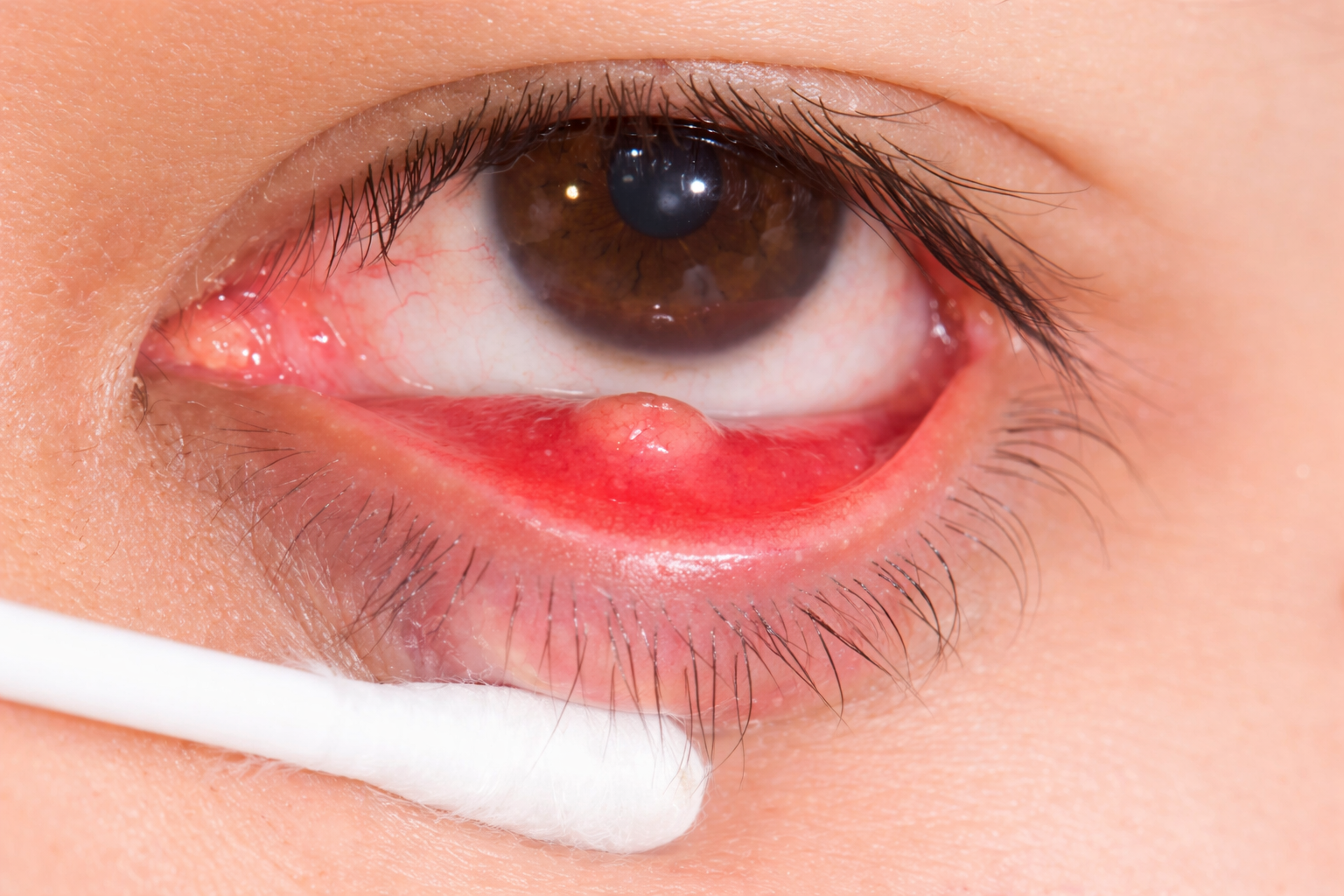
A chalazion is a painless lump that forms on the eyelid when one of the meibomian oil glands becomes blocked. These glands normally produce oils that help stabilize the tear film and keep the eyes lubricated.
When the gland becomes blocked, the oil cannot drain properly. This leads to inflammation and formation of a firm bump on the eyelid. Unlike a stye, a chalazion is usually not caused by active infection.
Chalazia often appear on the upper eyelid but can occur on the lower eyelid as well.
Chalazion vs Stye
Many people confuse chalazion vs stye. While both cause eyelid lumps, they have different causes and symptoms.
- Stye (Hordeolum): painful, red infection of an eyelid gland caused by bacteria.
- Chalazion: painless lump caused by blockage of the oil gland without active infection.
A stye often appears suddenly and may contain pus, while a chalazion usually develops gradually and feels firm rather than tender.
Common Causes of Chalazion
Several conditions increase the risk of developing a chalazion. These include:
- Blocked meibomian glands
- Chronic eyelid inflammation (blepharitis)
- Rosacea
- Oily skin
- Poor eyelid hygiene
- Previous styes
People who frequently develop eyelid inflammation or blepharitis are more likely to develop recurring chalazia.
Bump on Eyelid: Symptoms of Chalazion
The most common symptom is a bump on the eyelid. Other symptoms may include:
- Firm eyelid lump
- Mild eyelid swelling
- Occasional blurred vision if the lump presses on the cornea
- Watery eyes
Unlike a stye, chalazia usually cause minimal pain.
How to Get Rid of Chalazion
Many people ask how to get rid of chalazion. The first step is conservative treatment to help unblock the gland.
- Warm compress: apply a warm compress for 10–15 minutes several times per day.
- Eyelid massage: gentle massage helps encourage gland drainage.
- Eyelid hygiene: regular cleaning of the eyelid margins.
Consistent warm compresses can help many chalazia resolve within several weeks.
Ocusoft Lid Scrub and Eyelid Hygiene
Proper eyelid hygiene plays an important role in preventing chalazia. Many ophthalmologists recommend using products such as Ocusoft lid scrub to clean the eyelid margins.
Ocusoft lid scrub helps remove bacteria, oil, and debris from the eyelid margins and may reduce inflammation associated with blepharitis and meibomian gland dysfunction.
Regular eyelid hygiene is especially helpful for people who experience recurrent eyelid lumps.
Chalazion Treatment Options
If a chalazion does not improve with home care, medical treatment may be recommended.
- Prescription anti-inflammatory medication
- Antibiotic ointments if secondary infection occurs
- Steroid injection into the chalazion
Steroid injections are increasingly used in ophthalmology as a minimally invasive option for reducing chalazion inflammation.
Chalazion Removal
When a chalazion persists for several months or becomes large, doctors may recommend chalazion removal.
This procedure is usually performed in an ophthalmology clinic under local anesthesia and typically takes less than 15 minutes.
Chalazion Surgery
Chalazion surgery involves a small incision on the inner eyelid to drain the blocked gland. The procedure is safe and commonly performed.
Modern surgical techniques use very small instruments and allow patients to return to normal activities quickly.
Updated Treatments for Chalazion
Newer treatments for chalazion focus on improving oil gland function. These include:
- Meibomian gland expression
- Thermal pulsation therapy
- Intense pulsed light (IPL) therapy for meibomian gland dysfunction
These treatments target the underlying gland dysfunction that often causes recurrent eyelid lumps.
When to See an Eye Doctor
You should consult an eye doctor if:
- the chalazion lasts longer than several weeks
- the eyelid lump continues growing
- vision becomes blurry
- chalazia recur frequently
Persistent eyelid lumps sometimes require medical evaluation to rule out other eyelid conditions.
Conclusion
Chalazion is a common eyelid condition caused by blockage of oil glands in the eyelid. While many cases improve with warm compresses and eyelid hygiene, persistent chalazia may require medical treatment or chalazion surgery.
Maintaining good eyelid hygiene and treating underlying conditions such as blepharitis can help prevent future chalazia.
Medically reviewed by: WebEyeClinic Ophthalmology Team.
Last updated: March 6, 2026.