Published: 21 March 2026 | Medically reviewed | Last updated: 21 March 2026
What Is the Best Natural Lubricant for Dry Eyes?
Many people with dry eyes want a natural solution rather than relying only on eye drops. The problem is that there is no single “natural lubricant” that safely replaces the tear film in the same way your own tears do. In real medical practice, the safest and most effective first-line options for most people are usually preservative-free artificial tears, warm compresses, eyelid hygiene, and changes that reduce tear evaporation. For people asking specifically about a natural approach, the best answer is often this: the most helpful natural way to improve lubrication is to support your own tear film, especially by improving the oil layer from the meibomian glands with warm compresses and lid care.
Quick summary: There is no proven home “natural lubricant” that is safer or better than standard dry eye treatment. For many people, the most effective natural-supportive approach is warm compresses, eyelid hygiene, blinking more often, humidified air, and good hydration. If you need actual lubrication in the eye, preservative-free artificial tears remain the safest over-the-counter option. Avoid putting cooking oils, herbal products, or unapproved home remedies directly into the eyes.
What Does “Natural Lubricant” Mean for Dry Eyes?
When people search for a natural lubricant for dry eyes, they usually mean one of three things:
- A natural substance to put directly into the eyes
- A natural way to help the eyes make or keep better tears
- A treatment that feels gentler or more biologically similar to real tears
From a medical point of view, your own healthy tear film is the real natural lubricant. It has three important components: a watery layer, an oily layer, and a mucin layer that helps tears spread smoothly over the ocular surface. Dry eye often develops when one or more of these layers becomes unstable. That is why simply adding random oily substances is not the same as restoring normal lubrication.
The Best Natural-Supportive Option: Warm Compresses
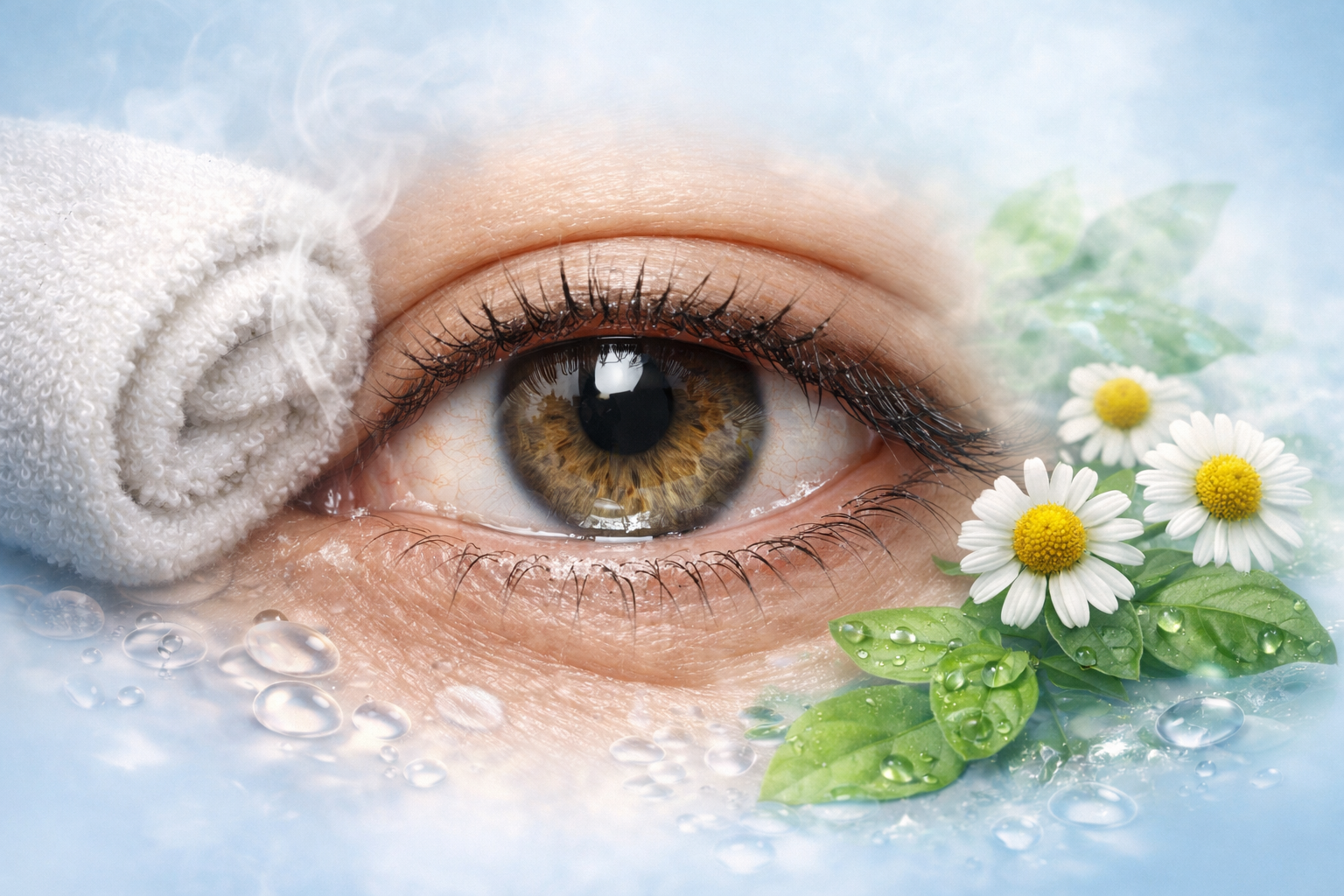
For many people, especially those with evaporative dry eye or meibomian gland dysfunction, the most useful natural-supportive treatment is a warm compress. Warmth helps soften and release the oils trapped in the meibomian glands along the eyelids. Those oils are essential because they form the outer layer of the tear film and slow down tear evaporation.
This is important because many dry eye cases are not caused by lack of tears alone, but by poor tear quality. If the oily layer is weak, the tears evaporate too quickly, leaving the eyes dry, irritated, and gritty. Warm compresses can therefore help the eyes maintain a more natural tear film rather than just briefly coating the surface.
Why Eyelid Hygiene Also Matters
If eyelid debris, blepharitis, or gland blockage is part of the problem, eyelid hygiene can also improve natural lubrication. Cleaning the eyelid margins may help reduce inflammation and improve oil flow from the meibomian glands. For many patients, warm compresses plus gentle lid cleansing are more helpful long term than looking for a single natural drop or oil.
Are Natural Oils Safe to Put in the Eyes?
In general, no home oil should be placed directly into the eye unless it is a medically formulated ophthalmic product. People sometimes ask about coconut oil, castor oil, olive oil, or other natural oils. The problem is not whether these ingredients sound natural. The problem is that the eye is extremely sensitive, and non-sterile or non-ophthalmic substances may cause irritation, allergic reaction, blurred vision, contamination, or even infection.
Some commercial dry eye products may contain castor oil or lipid-based ingredients, but those are specially formulated for ophthalmic use. That is very different from putting household oil or homemade mixtures into the eye.
Do not put homemade oils, herbal extracts, breast milk, saliva, honey, or unsterile home remedies into your eyes. “Natural” does not always mean safe for the ocular surface, and these products can cause irritation or infection.
If You Need Actual Lubrication, What Works Best?
If your question is really about what works best to lubricate the eye surface itself, the answer for most people is still preservative-free artificial tears. They are not “natural” in the pure home-remedy sense, but they are designed to be safe, sterile, and compatible with the eye surface. Many eye specialists prefer preservative-free drops when symptoms are frequent, because preservatives can irritate the eyes when used often.
Some formulations are better for certain types of dry eye:
- Standard lubricating drops for mild dryness
- Lipid-based drops for evaporative dry eye and meibomian gland dysfunction
- Gels or ointments for longer-lasting relief, especially at night
So while people often search for a natural lubricant, the safest answer for ongoing lubrication is usually still a preservative-free, medically formulated drop rather than a home remedy.
Can Diet Help Your Eyes Lubricate Naturally?
Diet may support tear film health, especially if your body is lacking nutrients needed for ocular surface function. Adequate hydration is important, and some people may benefit from improving intake of omega-3 fatty acids, although research on omega-3 supplements for dry eye has shown mixed results. Vitamin A is also essential for the eye surface and tear film. However, diet alone is usually not enough to fix established dry eye disease if gland dysfunction, inflammation, or eyelid disease is already present.
What About Autologous Serum Tears?
If you are asking about the most biologically natural drop used in medicine, one of the best examples is autologous serum tears. These are prescription eye drops made from a patient’s own blood serum and are used in more severe or difficult cases of dry eye. They can provide growth factors and biologically active components that resemble natural tears more closely than standard artificial tears. However, they are not a home treatment and are usually reserved for specific cases under specialist care.
Best Natural Ways to Reduce Dry Eye Symptoms
If you want the most useful non-drug and natural-supportive measures, these are often the best options:
- Warm compresses once or twice daily
- Gentle eyelid hygiene if blepharitis or oil gland blockage is present
- Blinking more often during screen use
- Taking screen breaks and positioning screens lower to reduce eye opening
- Using a humidifier in dry indoor environments
- Avoiding smoke, direct fan air, and strong air conditioning
- Staying well hydrated
- Using wraparound glasses outdoors if wind worsens symptoms
When Natural Measures Are Not Enough
If dry eyes are frequent, painful, or affect vision, natural measures may not be enough. Some people need prescription anti-inflammatory drops, punctal plugs, treatment for blepharitis, or targeted therapy for meibomian gland dysfunction. Dry eye can also be linked to autoimmune disease, medication side effects, contact lens wear, hormonal changes, or corneal nerve problems.
Final Answer
The best “natural lubricant” for dry eyes is not usually a household oil or homemade eye remedy. In practical terms, the best natural-supportive approach is to help your own tear film work better, especially with warm compresses, eyelid hygiene, hydration, humidified air, and better blinking habits. If you need something to actually lubricate the eye surface, preservative-free artificial tears remain the safest and most effective over-the-counter choice for most people.
So the most medically accurate answer is this: warm compresses are often the best natural-supportive measure, but preservative-free artificial tears are the safest direct lubricant.
Need help with dry eye symptoms?
Ask an eye doctor at
WebEyeClinic
for trusted advice on dry eye treatment, eyelid care, and when symptoms may need medical evaluation.
This article is for educational purposes only and does not replace medical advice, diagnosis, or treatment. Dry eye can have many causes, and not every natural remedy is safe for the eyes. If symptoms are persistent or severe, seek professional eye care. Medically reviewed | Last updated: 21 March 2026.